
Evening Running Routine: Staying Consistent After Work as Days Get Shorter
💡 Key Summary
✅ For healthy adults, evidence that evening exercise harms sleep is weak, but avoid hard efforts within an hour of bed
✅ Lay out your clothes, fix a time, and commit to just 10 minutes, and evening runs get easier
✅ As daylight shrinks, pick bright routes and wear reflective gear and lights so you're seen
You promised yourself you'd run after work, but the moment you walked in the door you sat on the couch, right? Add the early autumn sunsets, which make dark roads a worry, and the fear that evening exercise might ruin your sleep, and it's easy to hesitate. This guide is for working people who want to keep up evening runs, covering sleep, habit, and safety in one place.
1. Does an Evening Run Hurt Your Sleep?
The short answer: "A moderate evening run doesn't seem to hurt sleep much." A 2019 meta-analysis in a sports medicine journal pooled 23 studies on evening exercise and sleep and found no sign that it harms sleep in healthy people. It added that vigorous exercise ending within an hour of bedtime may affect how long it takes to fall asleep and total sleep time.
| Today's run | Finish by | What to do |
|---|---|---|
| Easy pace, 30 min | 1 h before bed | Shower, then relax |
| Intervals or fast run | A few hours before bed | Finish early |
| Late at night | Skip the run | Walk or stretch |
Baptist Health says something similar. Your body temperature drops after a workout, which can make you sleepy, but some people get wired and can't sleep, so watch how your own body reacts.

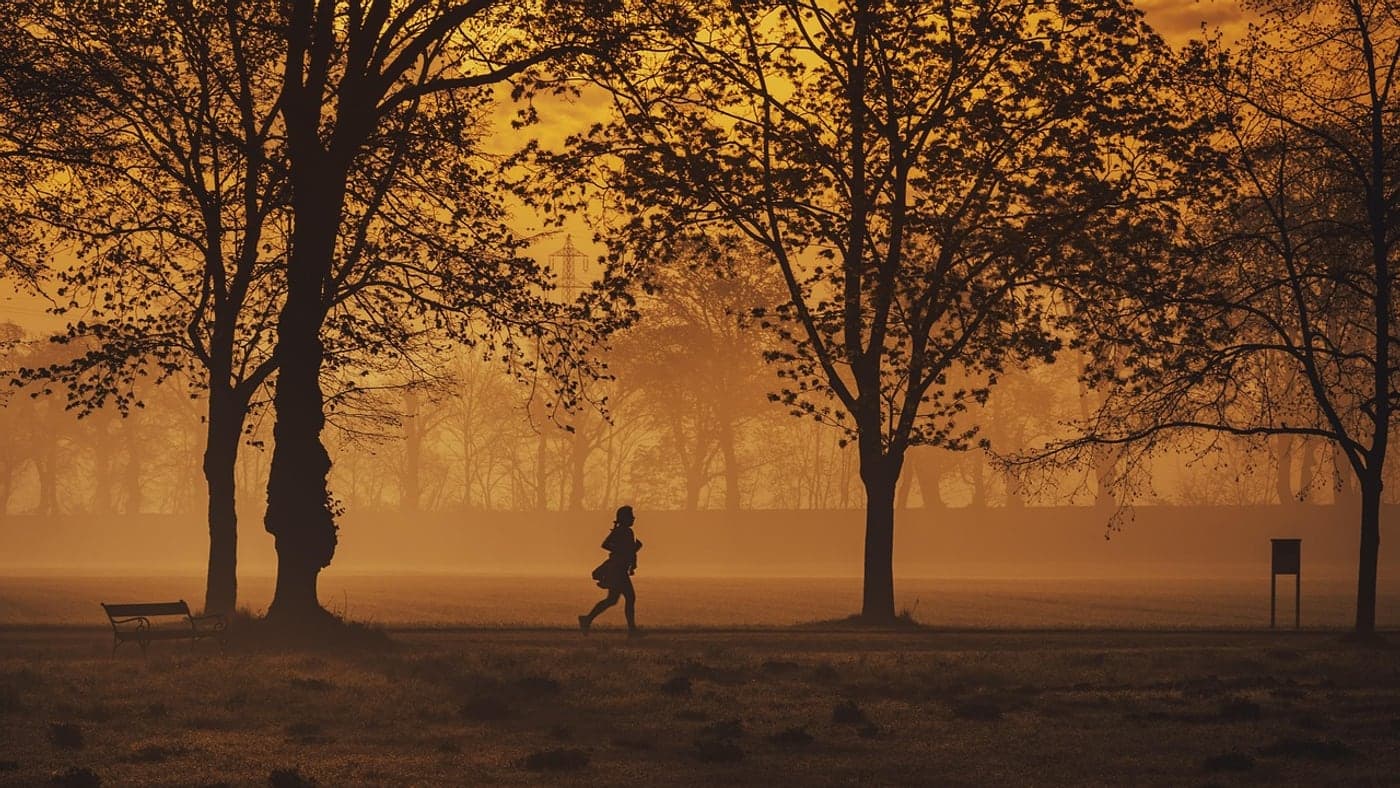
An easy run in the sunset glow is the calmest part of my day. Let's head out together!
2. Three Tricks to Stop Putting Off Your Evening Run
Evening runs are hard not because you lack willpower, but because "rest mode" switches on the second you get home. So it's easier to build the habit with setups than with willpower. The science of habits is also covered in the 30-Day Running Habit Challenge.
- Lay out your clothes: leave your running kit and socks where you'll see them, and you make fewer decisions after work
- Fix a time: instead of "after I rest," try "out the door within 30 minutes of getting home"
- Do just 10 minutes: head out for 10 minutes. Many days you'll end up running longer

In a habit formation study summarized by the British Psychological Society, a new behavior took 66 days on average to become automatic, ranging from 18 to 254 days between people. Missing a single day made little difference, so rather than beating yourself up, just come back the next day.
💡 Tip
Evening runs last longest not when you "feel good," but when the day and time are fixed. Start by locking in the days, like Monday, Wednesday, and Friday.
3. Running Safely as Days Get Shorter
Shorter days mean more runs in the dark. From the dark-running safety tips written by a Marathon Handbook coach, here are the easiest ones to put into practice.
| Safety tip | What to do | Key point |
|---|---|---|
| Be seen | Bright, reflective clothing | Vest, band, shoes |
| Lights | Headlamp or body light | See and be seen |
| Route | Bright, familiar roads | Run it in daylight first |
| Sound | Earbuds off, or just one | Hear what's around |
Tell someone your route and rough timing, and run with a friend or group if you're uneasy alone. Another tip is to run facing oncoming traffic. On nights when the weather or the road feels risky, a treadmill indoors is a good choice.
⚠️ Caution
If you get chest pain, dizziness, a cold sweat, or unusual shortness of breath while running, stop and rest right away. In the dark you can't see the ground well, so slow down to avoid rolling an ankle. If you have heart disease or high blood pressure, or you're returning after a long break, check with your doctor first.
4. Building Your After-Work Running Schedule
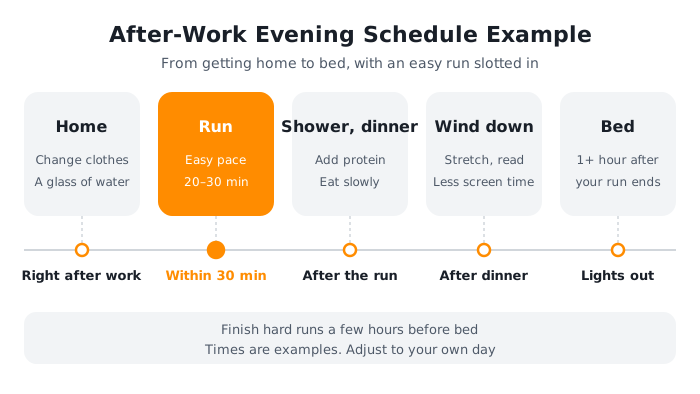
Adjust meals around your run time. For an after-work run, one option is a light snack around 4 p.m. and dinner after the run.
Details are in Fasted Running vs. Eating First.
| Day | Evening run | Time |
|---|---|---|
| Mon | Easy run | 20–30 min |
| Wed | Easy run | 20–30 min |
| Fri | Easy run or run-walk | 20–30 min |
| Sat–Sun | Rest or an easy walk | Flexible |
In the Wittiz app, set "Mon, Wed, Fri evening runs" as a fixed goal. Add friends and trade cheers, and heading out gets much easier even on "ugh, not today" days. Moongti grows the more you run and sulks when you rest for days, so "just 10 minutes before Moongti gets grumpy" becomes a handy excuse.

Tired day? Just 10 minutes! Once you're out, you've already won half the battle.
Frequently Asked Questions (FAQ)
Will running in the evening keep me awake?
For healthy people, evidence that a moderate evening run hurts sleep is weak. Hard efforts ending within an hour of bedtime may affect falling asleep, so finish intervals and other tough runs earlier. If you keep having trouble sleeping, move your run earlier.
I'm too tired after work to go out. What should I do?
Change into your running clothes and walk for 10 minutes. Getting out is half the battle, and once you warm up you'll often end up running. On really tough days, a walk still counts.
Is it okay to run on dark roads?
If you can, choose bright, familiar routes and use reflective gear and lights. Tell someone close to you your route, and keep your earbuds out or use just one. If you feel uneasy, a treadmill is safer.
Wrapping Up
Evening running runs on systems, not on how you feel. Lay out your clothes, fix a time, use the 10-minute rule, and pack safety gear, and 20 minutes after work becomes the best part of your day.
This week, pick just one day and set out your evening running clothes ahead of time. Moongti will be waiting by the door!
Try it for yourself in the Wittiz app!
References
- Stutz J et al. (2019). Effects of Evening Exercise on Sleep in Healthy Participants: A Systematic Review and Meta-Analysis. Sports Medicine
- Baptist Health. Should I Work Out at Night?
- British Psychological Society Research Digest. How long does it take to form a habit?
- Marathon Handbook. 10 Safety Tips For Running In The Dark
This article was written by the Wittiz team and includes app-related content. If you have heart disease, high blood pressure, or other conditions, or feel pain or dizziness while running, please be sure to consult a medical professional.