
Half Marathon Training: A 12-Week Plan from 10K to 21.1 km
💡 Key Summary
✅ A half marathon plan can run 12 weeks, 4 runs a week (2 easy, 1 variety run, 1 long run)
✅ Grow the long run from 8 km to 16 km, with deliberate cut-back weeks at weeks 4 and 8
✅ Taper for the last 2 weeks, and finish your longest run 14 days before race day
You finished a 10K, and a little voice says, "Next up, the half marathon." But when 21.1 km actually looms, you wonder how many weeks you need and how far the long run should go. This guide is for runners who've done a 10K and are planning their first half marathon, with a 12-week plan laid out week by week.
1. Half Marathon Training: 3 Things to Check Before You Start
This plan assumes you've finished a 10K at least once or have been running regularly. The coach quoted by Active.com says healthy runners should ideally have about six months of regular running before starting half marathon training. If you're not there yet, begin with the 10K 8-Week Training Plan.
| Check | Good to start | If not yet |
|---|---|---|
| Running experience | A few months of regular runs | Do the 10K plan first |
| Current weekly distance | Around 20–25 km (12–16 mi) | Build 2–3 more weeks |
| Body | No pain in daily life | Start once pain is gone |
The weekly distance benchmark comes from this plan's Week 1 of 24 km. If you're well below that, take 2–3 slower weeks to build up first. More time is always better.

12 weeks looks long, but checking off one week at a time goes fast. Shall we write down Week 1?
2. The 12-Week Half Marathon Plan: Weekly Distance at a Glance
Split the 12 weeks into three blocks. Weeks 1–4 build a base, weeks 5–10 grow the long run, and weeks 11–12 are a taper. Marathon Handbook's coach also says to cut volume in the last 2 weeks while keeping intensity, and to finish your longest run 14 days before the race.
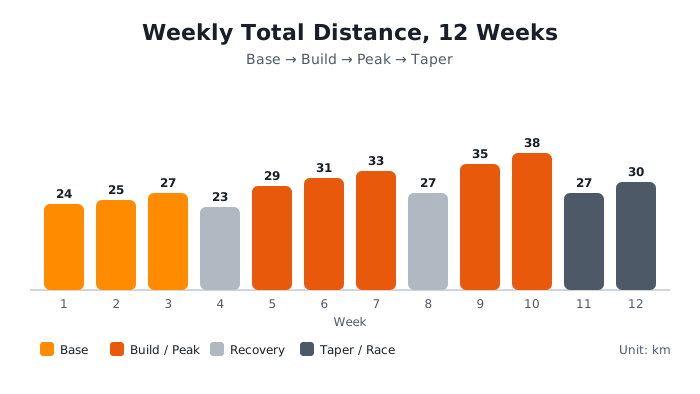
Each week has 4 runs: 2 easy runs, 1 variety run, and 1 long run. The tables combine "easy + easy + variety" distances in one column. On your other 3 days, rest, walk, or stretch lightly.
① Base Weeks (Weeks 1–4)
| Week | Easy + easy + variety | Long run | Weekly total |
|---|---|---|---|
| Week 1 | 5+5+6 km | 8 km | About 24 km |
| Week 2 | 5+5+6 km | 9 km | About 25 km |
| Week 3 | 5+6+6 km | 10 km | About 27 km |
| Week 4 (recovery) | 5+5+5 km | 8 km | About 23 km |
② Build Weeks (Weeks 5–8)
| Week | Easy + easy + variety | Long run | Weekly total |
|---|---|---|---|
| Week 5 | 6+6+6 km | 11 km | About 29 km |
| Week 6 | 6+6+7 km | 12 km | About 31 km |
| Week 7 | 6+7+7 km | 13 km | About 33 km |
| Week 8 (recovery) | 5+6+6 km | 10 km | About 27 km |
③ Peak and Taper (Weeks 9–12)
| Week | Easy + easy + variety | Long run | Weekly total |
|---|---|---|---|
| Week 9 | 6+7+8 km | 14 km | About 35 km |
| Week 10 (peak) | 7+7+8 km | 16 km | About 38 km |
| Week 11 (taper) | 6+6+5 km | 10 km | About 27 km |
| Week 12 (race) | 5+4 km | Race 21.1 km | About 30 km |
💡 Tip
A recovery week isn't a "lazy week." It's part of the plan. Cutting back in weeks 4 and 8 lets your body absorb the training so you run the next block better.
3. How to Run the Long Run and Variety Run
Run most of your miles at an easy pace where you could chat with a friend. Marathon Handbook also recommends a "nice and slow, relaxed pace" for beginners over speed. A variety run just means adding 1–2 km at a slightly harder effort in the middle of an easy run.
| Run type | Feel | How to run it |
|---|---|---|
| Easy run | Can hold a conversation | Slow down if you're gasping |
| Variety run | Hard but sustainable | Only 1–2 km in the middle |
| Long run | Comfortable to the end | Slower than race pace |
For adding distance, the guideline from Cleveland Clinic is "no more than 10% more per week." But even a review of 31 studies found mixed results on training load and injury, so treat 10% as a rule of thumb, not a law. This plan avoids jumping far past your previous peak week after a recovery week.

Practice your fueling and hydration on long runs too. What to eat before and after is covered in Fasted Running vs. Eating First.
⚠️ Caution
If you get chest pain, dizziness, a cold sweat, or unusual shortness of breath while running, stop and rest right away. Don't ignore joint pain or swelling that lasts a day or more. If you have heart disease or high blood pressure, or you're returning after a long break, check with your doctor first. Find an injury-prevention routine in the injury prevention guide.
4. How to Finish Strong in Race Week
During the taper, don't panic when mileage drops. Your body recovers and race-day form rises. Trust that you finished the last long run, 16 km, two weekends before the race (week 10), and keep race week to light movement.
| When | Do | Avoid |
|---|---|---|
| 2 weeks before | Final long run, 16 km | Adding more |
| 1 week before | Cut back to easy runs | New shoes, new food |
| Day before | Pack and sleep early | Long walks |
| Race day | Start the first 5 km slowly | Going out too fast |
In the Wittiz app, split the 12 weeks into weekly goals. Set something like "4 runs this week, 10 km long run," then check your report on the weekend to see how much your long run grew versus last week. The jelly you earn each time you hit a goal lets you dress up Moongti along the way.

21.1 km isn't one big run. It's the total of every week you showed up. Let's go together!
Frequently Asked Questions (FAQ)
How many weeks should half marathon training take?
If you already run 10K comfortably, 8–12 weeks can be enough. This plan uses 12, and newer runners are safer with longer. If time is tight, aim to finish rather than forcing the mileage up.
How far should my longest training run be?
This plan builds to 16 km. You don't need to run the full 21.1 km in training, since the taper brings your legs to race day fresh. Coaches differ on the exact peak, so adjust to how your body feels.
What if I miss some training?
If you miss a day or two, simply carry on with the next run. If you miss a week or more, repeat that week, and if the race is near, lower your goal to finishing. If pain caused the break, see a doctor first.
Wrapping Up
Half marathon training comes down to growing the long run slowly and respecting recovery weeks and the taper. Run 4 times a week at an easy pace and 21.1 km gets closer than you'd think.
This week, just pick the day for Week 1's 8 km long run. Moongti will run right beside you all the way to the finish line!
Try it for yourself in the Wittiz app!

References
- Nielsen RO et al. (2012). Training errors and running related injuries: a systematic review. International Journal of Sports Physical Therapy
- Cleveland Clinic. Is Running Bad for Your Knees?
- Active.com. Half-Marathon Training for Beginners
- Marathon Handbook. Couch to Half Marathon: The Realistic Beginner Plan
This article was written by the Wittiz team and includes app-related content. If you have heart disease, high blood pressure, or other conditions, or feel pain or chest discomfort during training, please be sure to consult a medical professional.