
Plantar Fasciitis Stretches for Runners: Sore First Steps and When to Run Again
💡 Key Summary
✅ Sharp heel pain on your first steps that eases as you walk is a classic plantar fasciitis pattern
✅ Calf and foot stretches have evidence, and adding strength work did better at three months
✅ Return gradually: walking → run-walk → easy running, guided by how your heel responds
You step out of bed and a spike of pain shoots through your heel. It fades after a few steps, so you head out for a run, and the next morning it's worse. This guide is for runners with sore first steps who want plantar fasciitis stretches and a safe way back to running, with the evidence and a step-by-step plan.
1. Sore First Steps: Is It Plantar Fasciitis?
The plantar fascia is a thick band running from your heel bone toward your toes. According to Korea's National Health Insurance Service webzine, the classic sign is pain on the inner heel when you first put weight on it in the morning. It often hurts when you start moving and may ease as you go.
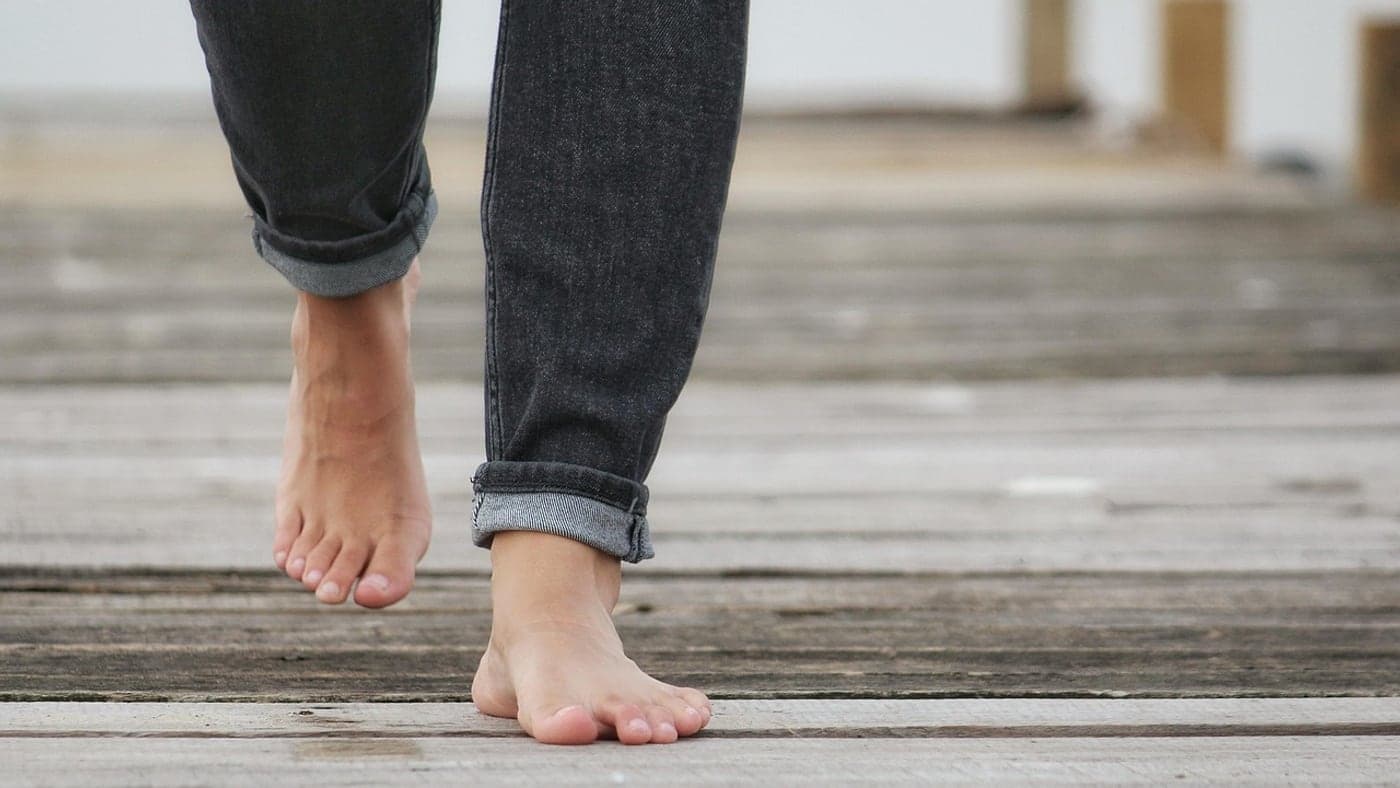
It's common in runners too. A 2014 Danish trial noted that plantar fasciitis may account for up to 8% of running-related injuries.
| Feature | Typical pattern | What to check |
|---|---|---|
| When it hurts | First steps, after sitting | Does it ease after a few steps? |
| Where | Inner heel | Painful when pressed? |
| Which moves | Toe lift, tiptoe | Does it change by move? |
Matching these doesn't confirm a diagnosis, and other foot problems can look similar. If pain lasts more than a few weeks, see a doctor. If you're unsure which running injury you have, the Running Injury Prevention Guide lists warning signs by body part.

If your first step hurts, take care of your foot today. I can wait!
2. Plantar Fasciitis Stretches: Are Stretches Enough?
A 2025 American Family Physician summary of the American Physical Therapy Association guideline says stretching the calf (gastrocnemius and soleus) and the plantar fascia reduces pain and disability. The evidence is low to moderate quality. Exercises for the toe flexors, the muscles on both sides of the ankle, and the calf improved pain and function more than stretching alone.
The Korean webzine suggests stretching the plantar fascia and Achilles tendon on waking and before walking after long sitting. Two simple options:
- Sit, cross the sore foot over the other knee, and gently pull your toes toward your shin
- Stand facing a wall, step the sore foot back, and press the heel down to stretch the calf
- Hold about 10 seconds and stop at a pull, never at sharp pain
One trial compared stretching with strength work head to head. Rathleff and colleagues randomized 48 people with ultrasound-confirmed plantar fasciitis. Everyone got shoe inserts. One group stretched the plantar fascia daily, and the other did single-leg heel raises with a towel under the toes every second day.
| Group | What they did | Result at 3 months |
|---|---|---|
| Stretch group | Toe pulls, 3 times a day | Reference group |
| Strength group | Slow heel raises, every 2nd day | Score 29 points lower |
| 6 and 12 months | Group comparison | No difference |
The strength group had a foot function score 29 points better at 3 months, but the groups were similar at 6 and 12 months. So strength work looks like a way to improve sooner rather than a better final result. The trial was small (48 people), and both groups also wore inserts.
💡 Tip
Do heel raises very slowly: 3 seconds up, 2 seconds hold at the top, 3 seconds down. Start with body weight only, and cut reps first if it hurts.
3. How Much Should You Run, and What Should You Change?
The Korean webzine says the first step is removing fixable causes such as poor technique, too much training, or uncomfortable shoes. An Active.com article for runners adds that rest, orthotics, and pain relievers can calm symptoms, but the problem can come back unless weak and tight foot muscles are addressed. In the same piece, physical therapist Irene Davis says runners can often keep running at a low to moderate level while symptoms allow.
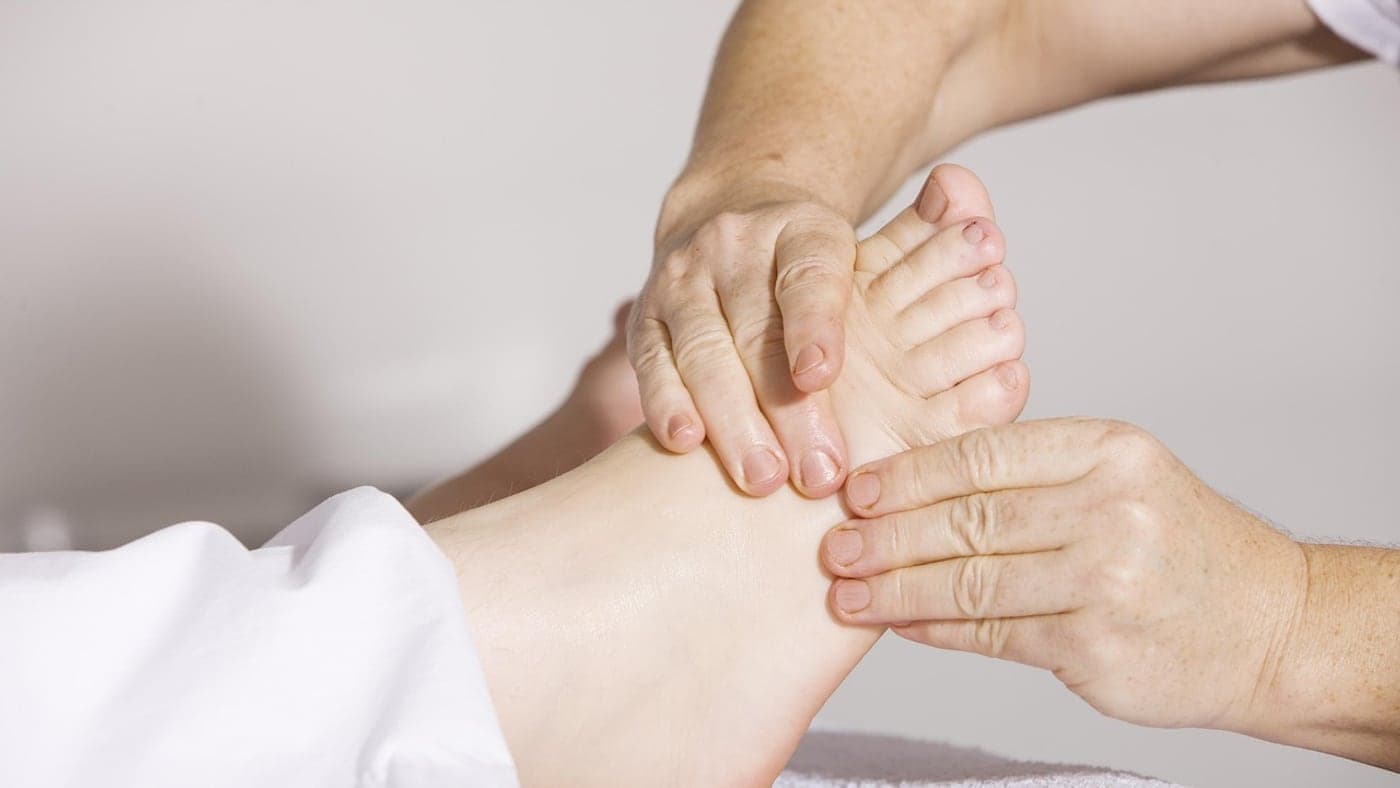
That doesn't mean running through pain. When it's flared up, swap in walking, cycling, or swimming, which load the sole less. Here are some general adjustments.
| Situation | What to change | Why |
|---|---|---|
| Hurts even when walking | Stop running, walk gently | Less strain on the fascia |
| Only first steps hurt | Halve distance and effort | Lower total load |
| Shoes are worn out | Check cushioning and soles | Check shock absorption |
You don't necessarily need new shoes; check whether the cushioning has flattened and whether they fit. Our beginner running shoe guide covers what to look for.
⚠️ Caution
If you can't put weight on your heel, or you have swelling, warmth, numbness, or tingling, stop running and see an orthopedic or sports medicine doctor. The same goes for pain that doesn't improve after a few weeks of rest or keeps getting worse. Plantar fasciitis can take six months or more of conservative care, so build your plan with a professional instead of guessing.
4. When to Run Again: A Four-Step Ladder
Base your return on how your heel responds, not on the calendar. The Korean webzine notes that good results usually take six months or more of conservative care. Going slowly is the faster route in the end.
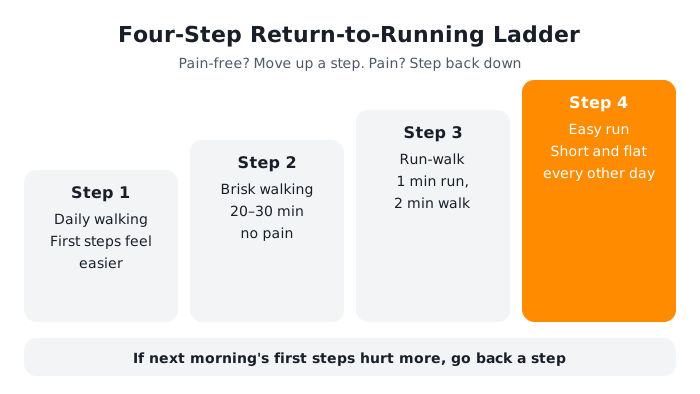
These steps are general examples, not a fixed schedule. It's fine to stay on each step for several days.
- Step 1: Wait until daily walking feels fine and first-step pain is easing
- Step 2: Brisk walking for 20–30 minutes with no pain
- Step 3: Run 1 minute, walk 2 minutes, for about 20 minutes
- Step 4: Easy runs on short, flat routes every other day
If your first steps the next morning hurt more, drop back one step. Our run-walk guide explains how to structure the intervals.

In the Wittiz app, set a low goal for each stage. Try "two run-walks this week, under 20 minutes" so you're tracking time and sessions instead of distance. Logging pain-free days shows how your mornings are improving, and Moongti never sulks on rest days.

One step at a time! If this morning's first step felt good, you're doing great!
Frequently Asked Questions (FAQ)
Can I keep running with plantar fasciitis?
If the pain is mild and isn't worse the morning after a run, some people keep running with less distance and effort. If it hurts even when walking or keeps worsening, rest and see a doctor.
How often should I do plantar fasciitis stretches?
The trial used seated toe pulls held 10 seconds, 10 times, three times a day. Doing them before your first steps and before walking after long sitting works well. If it hurts, ease off the intensity first.
How long does plantar fasciitis take to heal?
It varies a lot. The Korean webzine says conservative care often takes six months or more. If nothing changes after a few weeks, get checked for other causes.
Wrap-Up
For plantar fasciitis, add slow strength work to calf and foot stretches, then return gradually based on your pain. The best signal is how your first steps feel the next morning, not the date.
This week, try three 10-second calf stretches right after you get up. Moongti will cheer you on from the very first step!
Try it for yourself in the Wittiz app!

References
- Rathleff MS et al. (2015). High-load strength training improves outcome in patients with plantar fasciitis: A randomized controlled trial with 12-month follow-up. Scandinavian Journal of Medicine & Science in Sports
- Arnold MJ et al. (2025). Plantar Fasciitis: Guidelines From the American Physical Therapy Association. American Family Physician
- National Health Insurance Service (Korea). Health Notes: Plantar Fasciitis (Korean)
- Active.com. How to Treat and Prevent Plantar Fasciitis for Runners
This article was written by the Wittiz team and includes app-related content. If your heel pain persists, or you have swelling, numbness, or pain that stops you from putting weight on your foot, please be sure to consult a medical professional.