
Run-Walk for Beginners: How to Start Running Without Gasping for Air
💡 Key Summary
✅ Run-walk means walking before you run out of breath, then running again once you recover
✅ Aim to run at a pace where you're breathing hard but can still talk, and walk until breathing feels easy
✅ Add just 30 seconds to your run segments every 2–3 weeks, and step back if pain shows up
"I started running and was out of breath within a minute." That experience makes plenty of beginners quit in week one. This guide is for new runners who can't yet run non-stop, and it covers how the run-walk method (called 걷뛰 in Korea) lets you start without gasping.
1. Does run-walk really count as running practice?
Yes, it does. You alternate running and walking segments, so the walking portion lets you recover from the fatigue built up while running. RunnersConnect points out that the real problem for beginners is trying to run continuously too soon and overdoing it.

The UK's NHS recommends at least 150 minutes of moderate activity a week, and the World Health Organization says any activity is better than none. Walking minutes count as time spent moving.
| Approach | Upside | Downside |
|---|---|---|
| Continuous running | Simple to track | Easy to quit when winded |
| Run-walk | Spreads out fatigue | Feels slow at first |
| Walking only | Lowest effort | Doesn't build running feel |
A study cited by Hinge Health found that recreational marathoners who used run-walk intervals reported less muscle pain and fatigue than those who ran the whole way. The sample was small, so read it as "worth trying" rather than "better."

Walking counts as training! Even at a slow pace, I'll go the whole way with you.
2. How to pick a run-walk ratio that doesn't leave you breathless
Set your ratio by feel, not by the clock. Hinge Health uses a 0–10 effort scale (RPE) and suggests about 4–5 for run segments and 1–3 for walk segments. That means breathing hard but able to talk while running, and chatting easily while walking.
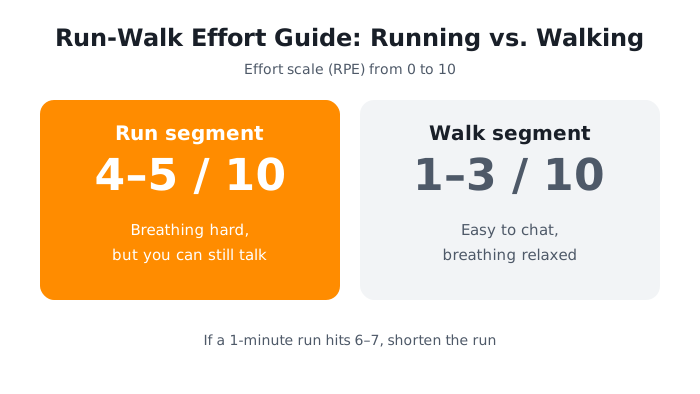
A good starting point is 1 minute running and 4 minutes walking (1:4). If that's still hard, drop to 1 minute running and 6 minutes walking (1:6). If a 1-minute run pushes you up to a 6–7, shorten the run segment.
- Easier start: run 30 seconds, walk 2 minutes
- Standard start: run 1 minute, walk 4 minutes
- Gentlest start: run 1 minute, walk 6 minutes
💡 Tip
Don't power-walk the walk segments. Walk at a pace that lets your breathing settle, so the next run feels easier.
3. A 6-week plan to build up your running time
There's no hurry in moving from run-walk to continuous running. RunnersConnect suggests lengthening the run segment by 30 seconds every 2–3 weeks while keeping the walk the same, and not raising your run ratio and weekly mileage in the same week.

Below is a 6-week example Wittiz built from that principle. Take 2 weeks per step if you're not feeling great. If you've already done our first 5K in 4 weeks plan, you can start at week 1 lightly.
| Week | Run | Walk | Rounds |
|---|---|---|---|
| 1–2 | 1 min | 3 min | 6–7 |
| 3–4 | 2 min | 2 min | 6–7 |
| 5 | 3 min | 2 min | 5–6 |
| 6 | 5 min | 2 min | 4 |
Three sessions a week of 25–30 minutes is plenty. Don't skip steps on good days, and go back a step on rough ones. If you want to see how a short daily habit builds up, read Running 10 Minutes a Day too.

If pain shows up, go back to the previous ratio for 2 weeks, then increase in smaller steps.
4. Tips to keep run-walk going
Run-walk lasts longer when you think "just until the next walk" instead of obeying the clock. Set a timer or app alert to call out the segments so you don't have to do math while out of breath.
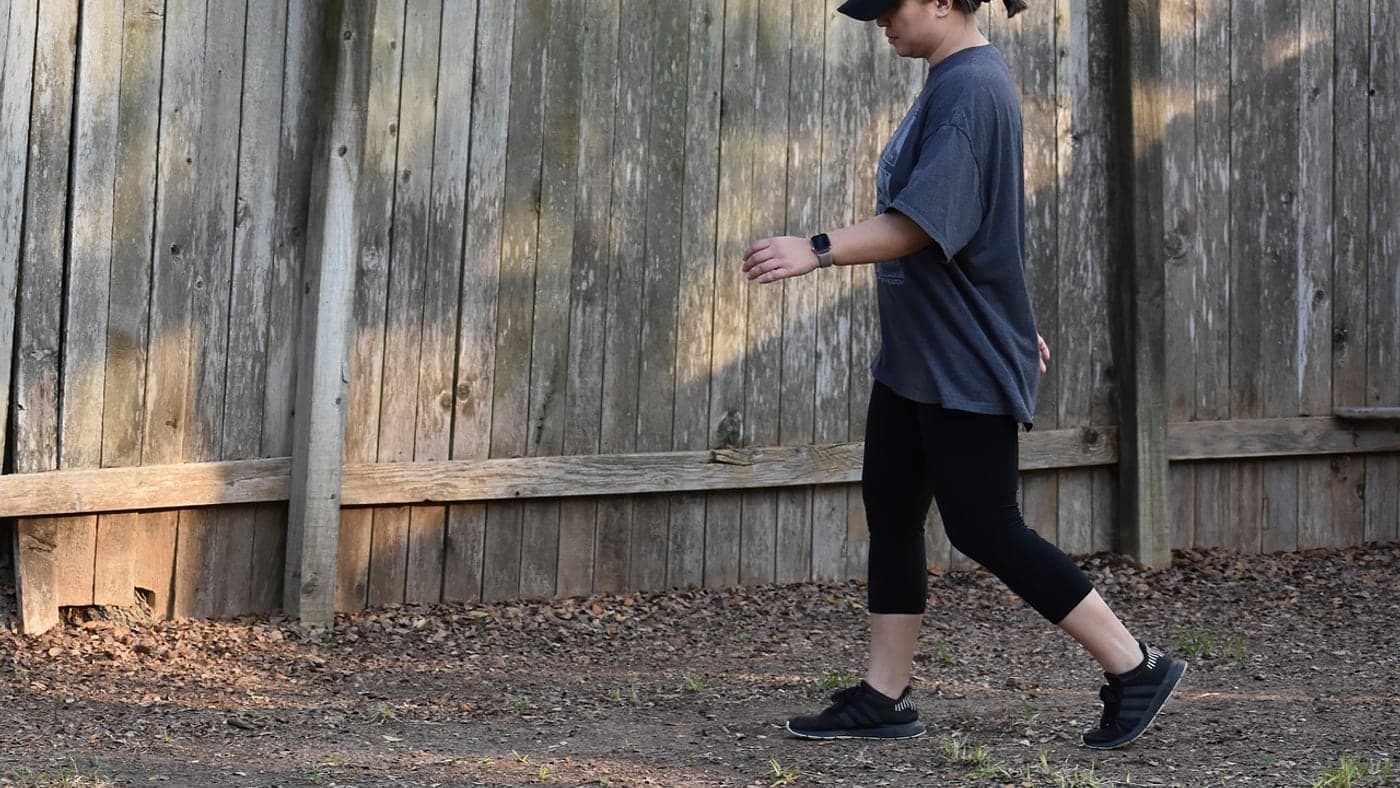
As the beginner running guide explains, how often you go matters more than speed at first. Once run-walk feels comfortable, try speed work with the interval running guide for beginners.
⚠️ Caution
Stop immediately and rest if you feel chest pain, dizziness, cold sweats, or unusual shortness of breath. If you have heart disease, high blood pressure, or a joint condition, or haven't exercised in a long time, talk to a doctor first. If knee or foot pain keeps coming back, don't push through.
Let an app keep count of your run-walk sessions. In the Wittiz app, set a goal like "3 run-walks this week," and spend the jelly you earn on the distance you cover to dress up Moongti. A cheer from a friend makes it easier to get out the door on lazy days.

Just run 1 minute and walk today! The days you start light are the ones that last.
Frequently Asked Questions (FAQ)
Does run-walk still count as a workout?
Yes. Walking minutes are time spent moving, so they count toward the weekly activity levels the WHO and NHS describe. Run-walk alone won't make you faster, so lengthen your run segments little by little once it feels easy.
How long until I can run non-stop?
It varies. RunnersConnect says the full transition usually takes 8–12 weeks, and some people need 14–16. Lengthen your run segments once easy days stack up.
Should I walk fast during the walk segments?
No. Walk segments are for catching your breath, so walk at a comfortable pace. If your breathing doesn't settle, add 30 seconds to 1 minute to the walk.
Wrapping Up
Run-walk isn't a method for people who can't run. It's how people who want to run for years begin. Start with a ratio that keeps your breathing easy and add a little running time every 2–3 weeks.
This week, just try 1 minute of running and 4 minutes of walking, 6 times. Moongti will stroll along with you!
Try it for yourself in the Wittiz app!

References
- RunnersConnect. Run Walk to Running: When and How to Make the Shift
- Hinge Health. How to do the run walk method
- NHS. Get active
- World Health Organization (WHO). Physical activity fact sheet
This article was written by the Wittiz team and includes app-related content. If you have a heart condition, high blood pressure, or other health concerns, or feel pain or dizziness while running, please be sure to consult a medical professional.