
How to Carb Load: What and How Much to Eat Before Race Day
💡 Key Summary
✅ Carb loading is for races lasting over 90 minutes, and usually isn't needed for a 5K or 10K
✅ The guideline is 10–12 g of carbs per kg of body weight per day, starting 36–48 hours before the race
✅ Cut back on fiber and fat, stick to familiar white rice, noodles, and bread, and skip new foods
"Eat pasta the night before a race" — you've heard it, right? But how much should you actually eat, when should you start, and what if it upsets your stomach? This guide is for runners preparing for a half or full marathon and carb loading for the first time, with the research-backed numbers and a practical menu.
1. Who Actually Needs Carb Loading?
Carb loading means eating more carbohydrate than usual before a race to fill your muscle energy stores (glycogen) as much as possible. The Gatorade Sports Science Institute's carbohydrate guide says this applies to endurance events that last over 90 minutes. For events shorter than that, such aggressive eating isn't necessary.

| How long you run | Carb loading | What to do |
|---|---|---|
| Under 60 min | Usually not needed | Eat as usual |
| Around 90 min | Light version | A bit more carbs the day before |
| 2 hours or more | Worth considering | Start 36–48 hours out |
The same source notes that one study found no improvement in half marathon performance despite higher glycogen stores. So if you're running a half, first ask whether you'll run over 90 minutes and whether your normal meals are enough. For everyday pre- and post-run eating, see Fasted Running vs. Eating First.

It's not about eating as much as possible. Remember, it matters more the longer you run!
2. How to Carb Load: When to Start and How Much
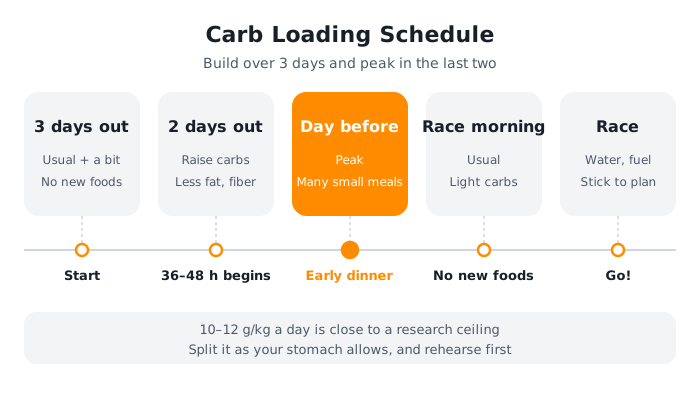
There's one key number. The Gatorade Sports Science Institute article reports the common recommendation as 10–12 g of carbs per kg of body weight per day for 36–48 hours before an event over 90 minutes. A 2023 case report on one elite race walker cites the same range, and found that much higher intakes (about 16 g/kg a day) upset the stomach and raised body mass by 2–3%.
| Body weight | Daily carbs (10–12 g/kg) | How it feels |
|---|---|---|
| 50 kg (110 lb) | About 500–600 g | Quite a lot |
| 60 kg (132 lb) | About 600–720 g | Split it up |
| 70 kg (154 lb) | About 700–840 g | Use liquid carbs too |
These figures are calculated, hence "about." Don't be alarmed by the size. The guideline is closer to a research ceiling, and in practice it's realistic to spread it over many small meals you can digest easily.
| Source | When to start | Carb target |
|---|---|---|
| Gatorade Sports Science Institute | 36–48 h before | 10–12 g/kg a day |
| Runner dietitians' guide | 7 days (marathon) / 3 days (half) | 6–10 g/kg, then 8–12 g/kg the day before |
Sources differ a bit on timing and amounts. Either way, it's safer to build up gradually over several days than to suddenly eat a lot right before the race.
3. What to Eat and What to Cut Back On
A guide by two runner dietitians at The Mother Runners recommends simple carbs like white rice, pasta, potatoes, bread, oatmeal, bagels, and pancakes. Aim for a plate that's about half carbs, with protein and vegetables each a quarter, and keep fiber to about 20–25 g a day and cut back on greasy food.

| Good choices | Cut back on | Why |
|---|---|---|
| White rice, noodles, pasta | Fried food, fatty meat | Slow to digest |
| Toast with jam, banana, honey | Raw salads | High in fiber |
| Potato, oatmeal, rice cakes | Beans, lots of whole grains | Can cause gas |
💡 Tip
Don't try anything new from 3 days out. The real trick to carb loading is picking only foods you've eaten before long runs and know sit well.
4. A Day-Before and Race-Morning Menu
Carb loading isn't one big feast. It's a schedule of slightly bigger meals and snacks. The day before, keep to your usual carb-focused meals with extra snacks, and eat an easy-to-digest dinner early. For race-morning strategy, read it together with the race week plan in the 12-week half marathon plan.

| Time | Menu example | Point |
|---|---|---|
| Day-before breakfast | Toast with jam, banana | As usual |
| Day-before lunch | White rice and grilled fish | Go easy on oil |
| Day-before snack | Rice cake, honey water, juice | Split it up |
| Day-before dinner | Pasta or noodles | Eat early |
⚠️ Caution
If you have diabetes or manage your blood sugar, or have kidney or digestive conditions, talk to your doctor or a dietitian before carb loading. If you get stomach pain, vomiting, or dizziness while eating more, scale back. Water is stored along with the carbs, so your weight may rise a little. That's a normal response, so don't be alarmed by the scale.
A rehearsal is the surest method. In the Wittiz app, set a goal like "one long run this week," and try carb loading the day before that long run. Note how your stomach felt, then compare that day's pace and distance in your records and report to see what works for you. The jelly you earn for each goal lets you dress Moongti up along the way.

The day before a race, eating is practice too. Eat well, sleep well, and let's run together!
Frequently Asked Questions (FAQ)
How many days before should I carb load?
The Gatorade Sports Science Institute uses 36–48 hours before the race. Some dietitian guides suggest building up from 7 days out for a marathon or 3 days for a half, so if it's your first time, increase slowly over 3 days.
Is it okay if I gain weight from carb loading?
Water is stored along with carbs, so your weight may rise a little right before the race. One case report found a gain of 2–3%. It isn't a bad sign, so there's no need to worry.
Do I need to carb load for a 10K or half marathon?
For races under 90 minutes, usually not. Adding a bit more carbs the day before your normal meals is enough. If you take over 2 hours for a half, you can try a light version.
Wrapping Up
Carb loading is a strategy of eating easy-to-digest carbs in small portions over the 36–48 hours before a race lasting over 90 minutes. Use familiar foods instead of new ones, and rehearse before the big day.
This week, try swapping the night before your next long run to pasta or noodles. Moongti will cheer you on right beside the dinner table!
Try it for yourself in the Wittiz app!

References
- Wallis GA, Podlogar T. Dietary Carbohydrate and the Endurance Athlete: Contemporary Perspectives. Gatorade Sports Science Institute, Sports Science Exchange
- Kondo E et al. (2023). Comparison of three type of muscle glycogen loading interventions using a very-high-carbohydrate diet in an elite male racewalker: a case report. Physical Activity and Nutrition
- The Mother Runners. Carb Loading Before a Marathon: How to Nail Your Nutrition
This article was written by the Wittiz team and includes app-related content. If you have diabetes, kidney or digestive conditions, or feel unwell while adjusting your diet, please be sure to consult a medical professional.