
Running in Cold Weather: Is Cold Air Bad for Your Lungs?
💡 Key Summary
✅ For healthy people, there's little evidence that cold air damages your lungs. Most effects are short-lived
✅ Cold, dry air can dry out and irritate your airways, which may cause a cough or chest tightness
✅ Cover your mouth, warm up, and start slow. If you have asthma, check with your doctor first
"Cold air freezes your lungs" — you've probably heard that one. But when you're out there in the wind with a scratchy throat and a tight chest, it's fair to wonder. This post is for runners who are about to start running in cold weather and want to know what cold air really does to the lungs, based on research and health-system guidance.
1. Is running in cold weather bad for your lungs?
The short answer from an internal medicine physician at University of Utah Health: for generally healthy adults, the benefits of getting outside outweigh the risks. Feeling cold air in your lungs isn't necessarily harmful, and the risk is very low for healthy young and middle-aged people. About 20 minutes, three or four times a week, can help your heart and lungs.

It isn't the same for everyone, though. This table shows where you might fit.
| Group | Situation | What to do |
|---|---|---|
| Healthy adults | No known conditions | Dress well, breathe easy |
| People with asthma | Cough or wheeze in cold air | Run after talking to a doctor |
| People with heart disease | Cold adds strain | Check with a doctor first |

A scratchy breath in the cold doesn't mean your lungs are hurt. Your body is often just adjusting!
2. What happens in your airways when you breathe cold air?
Cold air holds very little moisture. When you breathe hard while running, water evaporates from the surface of your airways, which cools and dries the lining. A pulmonologist at Ohio State (Jonathan Parsons) explains that this irritates and can narrow the airways, which is why your chest may burn or ache.
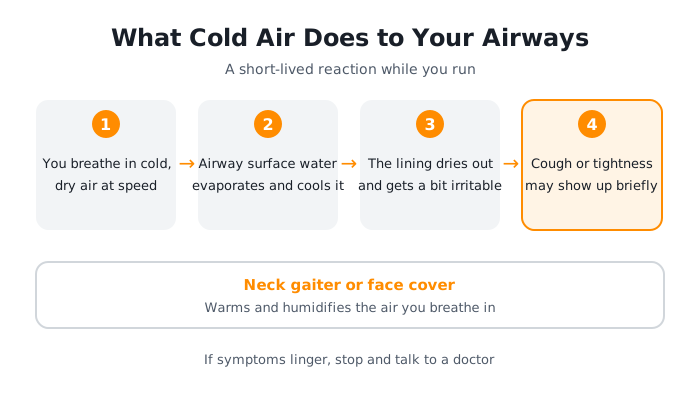
A 2020 review on winter athletes (Hanstock et al., Frontiers in Sports and Active Living) describes the same mechanism. Breathing through your mouth at high intensity warms and humidifies air less effectively than breathing through your nose. The review says respiratory symptoms are common in winter athletes, but it also notes the evidence in healthy people is still limited.
- Usually short-lived: It tends to settle soon after you stop
- Harder effort, bigger effect: The more you gasp, the more dry air comes in
- Extreme cold needs more research: In a lab study, 2 hours of light exercise at −23°C (−9°F) raised inflammatory cells in healthy people's lower airways, but no temperature threshold for harm has been set
📌 Note
That review is a narrative review, and much of it covers extreme conditions around −20°C. It doesn't translate neatly to everyday winter jogging.
3. Breathing tips that make winter running easier
Ohio State's guidance suggests covering your mouth and nose with a mask or scarf when the temperature drops below 0°C (32°F). It warms and moistens the air before it reaches your lungs. Layer up as in our running clothes by temperature guide, so you can peel layers off as you heat up.

| When | What to do | Why |
|---|---|---|
| Before | Warm up well | Eases the sudden breathing load |
| While running | Cover mouth with a gaiter | Warms and humidifies air |
| Pace | A talking pace | Keeps breathing from getting harsh |
| After | Drink water, take a warm shower | Soothes dried-out airways |
💡 Tip
In winter, use time or how it feels instead of pace as your goal. A slightly slower pace while your body adapts to the cold is normal.
4. Signs that mean stop and get it checked
Most discomfort fades quickly, but don't brush off the signs below.
| Sign | What it may mean | What to do |
|---|---|---|
| Tight chest after you stop | May be more than irritation | Go inside and rest |
| Repeated wheeze or cough | Airways may be sensitive | See a doctor |
| Chest pain, dizziness, cold sweat | Needs checking right away | Stop immediately |
⚠️ Caution
If you have asthma, tend to wheeze in cold air, or have heart disease, talk to your doctor before winter running. If you get chest pain, dizziness, a cold sweat, or trouble breathing, stop right away, and see a doctor if tightness continues even after you go indoors.
It's fine to skip a day when the weather is truly rough. If you're feeling under the weather, see Running and Your Immune System: Should You Run With a Cold?, and for the bigger picture, our injury prevention guide helps too.
In winter, "how many times did I get out this week" matters more than distance or pace. In the Wittiz app, set a time goal like "20 minutes, 3 times this week," then check your report to see how steadily you got out even in cold weeks. The jelly you earn lets you dress Moongti in winter outfits, too.

Bundle up and head out nice and slow today. Getting out the door is half the win!
Frequently Asked Questions (FAQ)
Can running in cold weather freeze or damage your lungs?
For healthy people, we didn't find evidence in the sources we read that cold air freezes or seriously damages the lungs. It can dry out and irritate the airways, causing a cough or chest tightness, but that's usually short-lived.
Do I need a mask or neck gaiter for winter running?
Not necessarily, but Ohio State's guidance suggests covering your mouth below 0°C (32°F). It warms and moistens the air you breathe in. If it feels stuffy, you can pull it down.
Can I run in winter if I have asthma?
Cold air can make asthma worse, so talk to your doctor first. If you've been prescribed medication, ask your doctor how and when to use it, and only use it as directed.
Wrap-Up
For healthy people, cold air is usually a short-lived annoyance, and covering your mouth and starting slowly lets you enjoy winter running. Just don't ignore warning signs from your body.
This week, grab your neck gaiter and run an easy 20 minutes. Moongti will bundle up and run right beside you!
Try it for yourself in the Wittiz app!

References
- Hanstock HG et al. (2020). Exercise in Sub-zero Temperatures and Airway Health. Frontiers in Sports and Active Living
- Ohio State University Wexner Medical Center. Why exercising in cold weather hurts your chest
- University of Utah Health. Is It Safe to Exercise in Cold Weather?
This article was written by the Wittiz team and includes app-related content. If you have asthma or another respiratory or heart condition, or feel chest pain or trouble breathing while running, please be sure to consult a medical professional.