
Convenience Store Running Diet: 3 Combo Formulas for Runners
💡 Key Summary
✅ Build a convenience store meal from three blocks: carbs + protein + veggies and fluids
✅ After a run, research points to 20–40 g of protein per meal
✅ Start with the serving size and servings per package on the nutrition label
You finish a run after work and there's no energy left to cook. So you duck into a convenience store, stare at the shelves, and have no idea what actually fits your goals. This guide is for runners who rely on convenience store meals around their runs and want a simple way to choose.
1. A convenience store running diet in three blocks
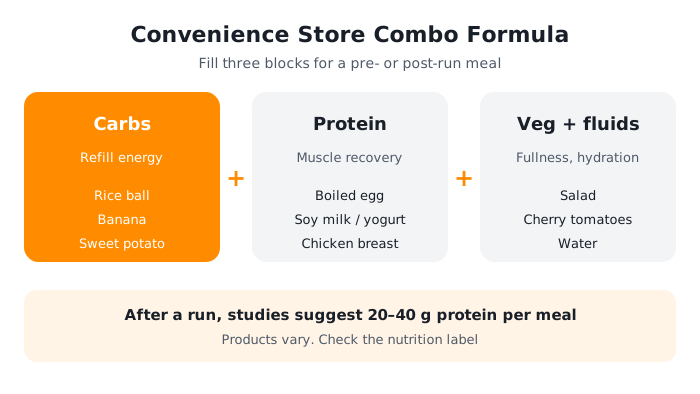
You don't need to memorize menus. Think of three slots to fill: carbs, protein, and veggies plus fluids. That works in almost any store, anywhere.
| Block | Job | Examples |
|---|---|---|
| Carbs | Fuel for the run | Rice ball, banana, sweet potato |
| Protein | Helps recovery | Boiled egg, soy milk, Greek yogurt |
| Veg + fluids | Fullness, hydration | Salad, cherry tomatoes, water |
What's on the shelf varies by store, so treat these as types of foods to look for. For timing ideas, our guide on what to eat before and after a run is a good companion.

Lost in the aisle? Remember three slots: carbs, protein, veggies and water!
2. Keep your pre-run snack light
Before a run, easy-to-digest carbs come first. Greasy or heavy foods can upset your stomach on the road, so a banana or a small rice ball is a gentler pick.
| Situation | Combo idea | Tip |
|---|---|---|
| Easy 30-min run | 1 banana + water | Only what feels comfortable |
| After-work evening run | Small rice ball + water | Eat less before running |
| Before a long run | Your usual carbs | Avoid new foods |
Planning fuel during long runs? See how to use energy gels. Try any new product on an easy run first, never on a big day.
3. After a run: aim for 20–40 g of protein
The International Society of Sports Nutrition (ISSN) position stand says high-quality protein within about two hours after exercise strongly stimulates muscle protein synthesis. The per-meal amount is 20–40 g, or 0.25–0.40 g per kg of body weight.
For a 60 kg runner, that works out to roughly 15–24 g per meal (our calculation). The same paper also discusses eating carbs and protein together for glycogen recovery. Timing matters most when your next session is soon or your usual intake falls short.
| Combo | What's in it | What to check |
|---|---|---|
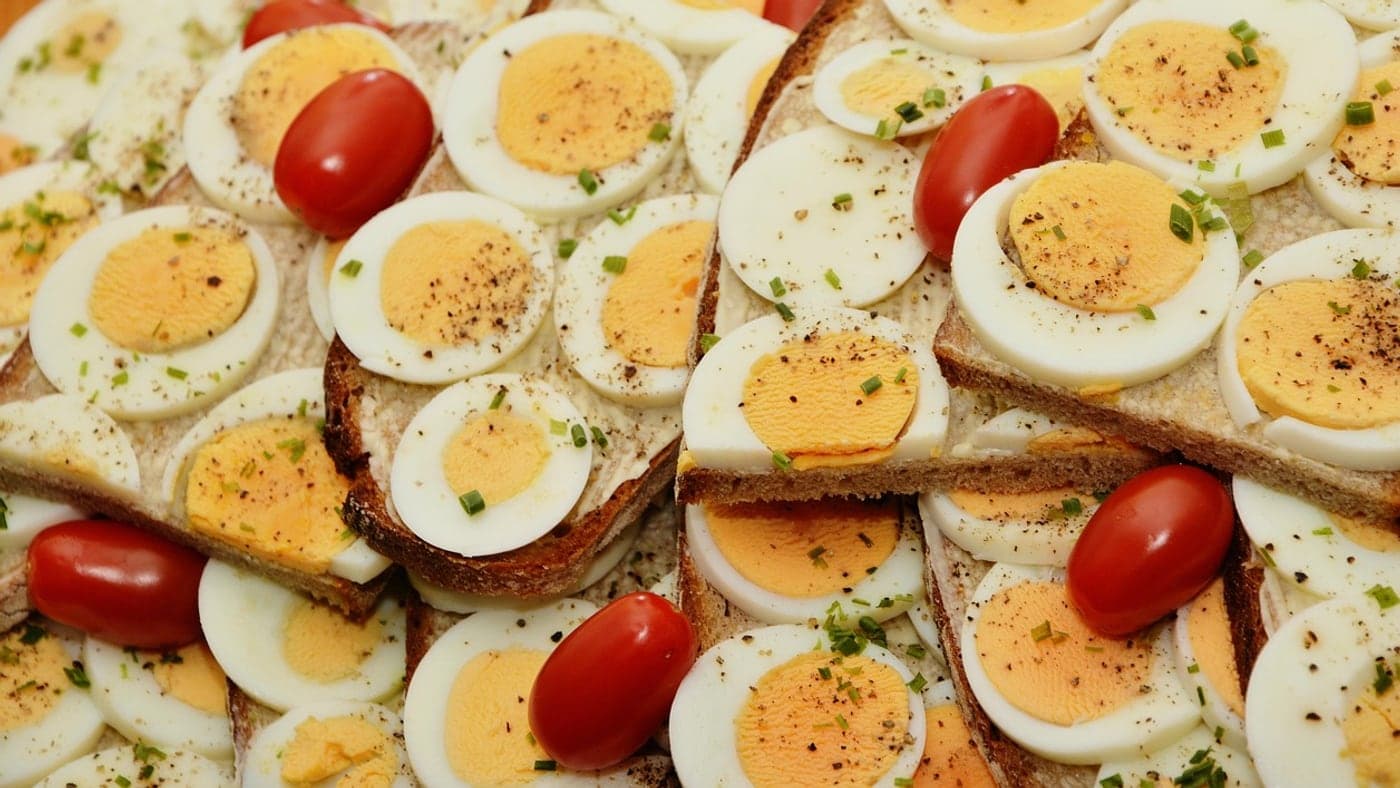
| A. Hearty | Rice ball + boiled egg + soy milk | Total protein (g) |
| B. Light | Sandwich + Greek yogurt | Sugar content |
| C. Veggie-forward | Salad + chicken breast + banana | Sodium in the dressing |
💡 Tip
Add up the protein grams on the labels yourself. Products differ, so numbers beat guessing by "two eggs' worth."
4. Reading the nutrition label: just three things
Nutrition labels in Korea list nine items: calories, carbohydrate, sugars, protein, fat, saturated fat, trans fat, cholesterol, and sodium. According to Korea's National Health Insurance Service, the serving size is a typical amount for one sitting, and servings per package shows how many of those the package holds.

| Item | What to look at | Why |
|---|---|---|
| Serving size | How many servings per pack | Eat it all, multiply it all |
| Protein | Near 20–40 g per meal? | Hits the post-run target |
| Sodium | % of daily value | Salty foods add up fast |
The World Health Organization recommends adults keep sodium under 2,000 mg a day (about 5 g of salt). Instant noodles or sauce-heavy lunch boxes can take a big share in one sitting, so check. Some items, such as calories, sugars, and trans fat, may not show a daily-value percentage, so compare their gram amounts directly.
⚠️ Caution
If you have diabetes, high blood pressure, or kidney disease, or have been given dietary limits, talk to a doctor or dietitian before choosing convenience store meals. Don't use convenience food as a reason to cut meals drastically. If you feel dizzy, break out in a cold sweat, or have chest pain after a run, rest and get help instead of eating through it.
What matters most is keeping this up for weeks. In the Wittiz app, set a goal like "run 3 times this week," swap in different post-run combos, and compare your pace and how you felt in the report. The jelly you earn for hitting goals lets you dress up Moongti, too.

Today's pick is tomorrow's fuel. Read the label once before you go!
Frequently Asked Questions (FAQ)
Can I follow a running diet using only convenience store food?
It's possible if you balance it. Pick carbs, protein, and veggies with fluids, and check sodium and sugars on the label. If you keep it up for a long time, mix in home cooking and fresh foods too.
What should I buy at a convenience store after a run?
Combos with both carbs and protein work well. Try a rice ball plus a boiled egg or soy milk, and aim for protein near 20–40 g.
What does "serving size" mean on a label?
It's the amount the manufacturer sets for one typical sitting. If a pack holds several servings, multiply the label numbers by how much you actually eat.
Wrap-up
A convenience store running diet comes down to three blocks and one look at the label. The best menu is the one you can keep choosing.
After your next run, pick one product that lists its protein grams and read its nutrition label. Moongti will read it with you at the register!
Try it for yourself in the Wittiz app!

References
- Kerksick CM et al. (2017). International society of sports nutrition position stand: nutrient timing. Journal of the International Society of Sports Nutrition
- National Health Insurance Service (Korea). Understanding nutrition labels (Korean)
- WHO. Salt reduction fact sheet
This article was written by the Wittiz team and includes app-related content. If you have diabetes, high blood pressure, kidney disease, or any other condition, or feel unwell after eating, please be sure to consult a medical professional.