
How to Use a Foam Roller: A 5-Minute Routine for Runners
💡 Key Summary
✅ Foam rolling can ease the feeling of soreness and widen your range of motion
✅ Calves, front and back of the thighs, and glutes take about 5 minutes at 30–40 seconds per leg
✅ Skip the shin bone, the knee joint and sharp-pain spots, and work the muscles around them instead
After a run, your calves and thighs can feel like rocks. Everyone says a foam roller helps, but once you're sitting on one, it's hard to know where to roll or for how long. This guide is for runners learning how to use a foam roller, with what the research actually says and a 5-minute routine by body part.
1. How Useful Is a Foam Roller, Really?
It isn't a cure-all. In 2019, Wiewelhove and colleagues pooled 21 studies (454 participants). Rolling after exercise gave the biggest effect, a lower sense of muscle soreness, while rolling before exercise gave a small, short-term gain in flexibility.
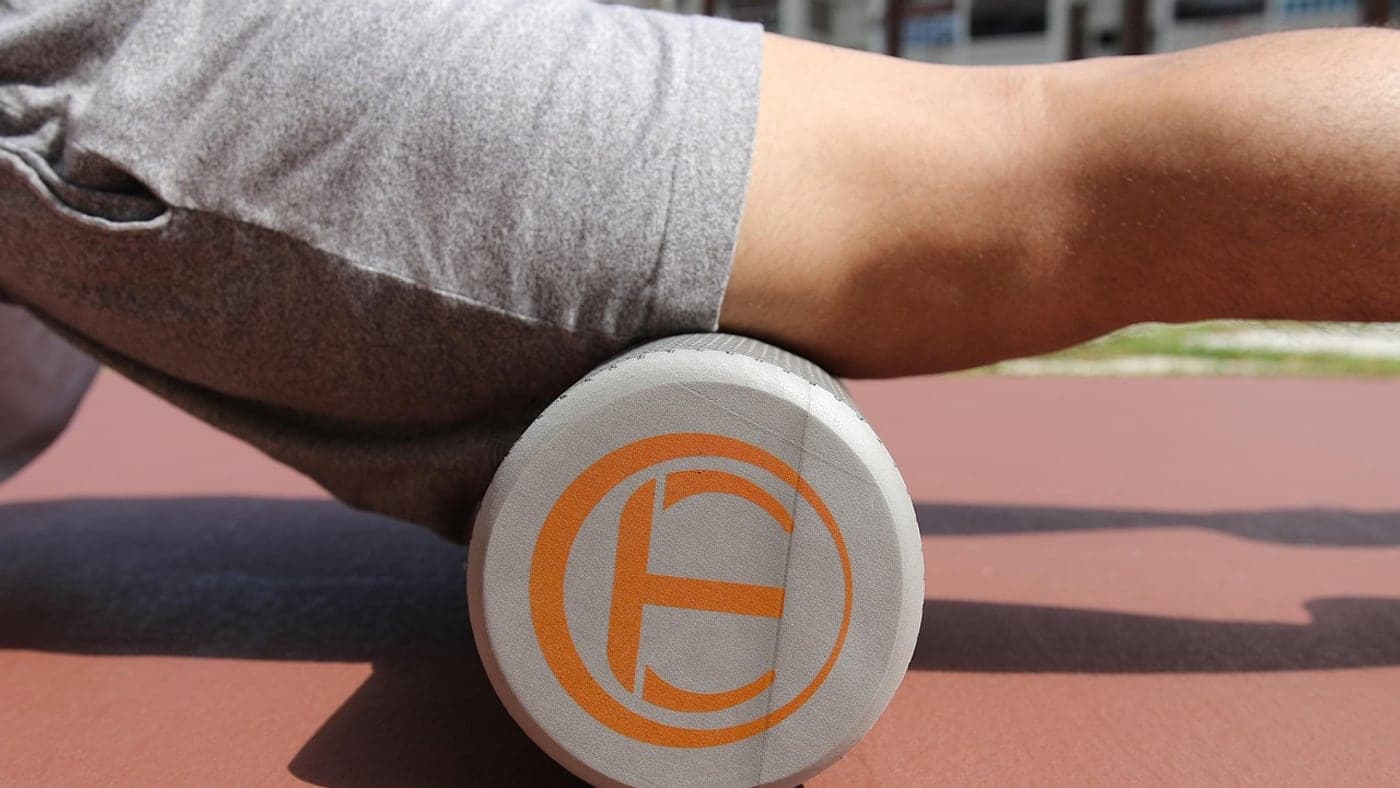
Jump and strength performance barely changed. The authors called the overall effects small and partly negligible, and noted that the studies were small and rolling pressure varied a lot.
| When | Fairly clear effect | Little to no effect |
|---|---|---|
| Before exercise | Slightly more flexibility | Jump, strength |
| After exercise | Less perceived soreness | Performance recovery |
| Vs. stretching | Mostly similar | A clear winner |
In 2021, Konrad and colleagues analyzed 13 studies comparing foam rolling with stretching and found no big difference in performance. So think of it less as "rolling makes me faster" and more as a tool for feeling looser and less sore.

It's not a magic speed button. Think of it as a little spa for tired legs!
2. A 5-Minute Routine: Calves, Thighs and Glutes
These are the four areas runners use most. The running site Marathon Handbook suggests roughly 30–60 seconds per area. The version below uses 30–40 seconds per leg, so both sides take about 5 minutes.
| Area | Position | Roll range |
|---|---|---|
| Calves | Seated, roller under calf | Back of knee → ankle |
| Front thigh | Forearm plank, roller under thigh | Below groin → above knee |
| Back thigh | Seated, roller under thigh | Below glute → back of knee |
| Glutes | One glute on the roller | Shift weight slowly |
For the glutes, cross one ankle over the opposite knee and lean slightly to reach the side of the hip. When you find a tender spot, stay there for 20–30 seconds and keep breathing. Move the roller slowly rather than rushing.
💡 Tip
Support your weight with your hands, and take pressure off by uncrossing your legs if it's too intense. Sore but still able to breathe easily is the right level.
3. Where Should You Never Roll?
Knowing what to skip matters as much as what to roll. Marathon Handbook says not to roll directly on the shin bone or over the knee joint. For the shins, angle the roller to the muscle on either side of the bone.
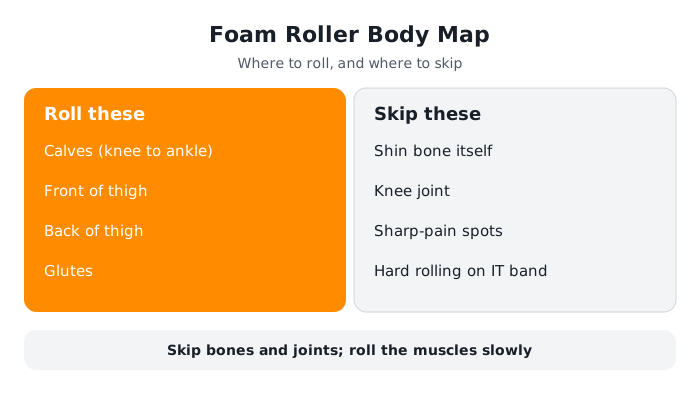
Be careful with the IT band too (the band of tissue along the outer thigh). It's dense connective tissue, so rolling it directly can hurt and may not help much. If the outside of your knee is sharp or sore, go easy and work the quads, hamstrings and glutes instead.
- Don't roll directly on the shin bone or knee joint
- Stop right away if you feel sharp, stabbing pain
- Don't grind on the IT band; work the muscles around it
- Don't roll over swollen or bruised areas
⚠️ Caution
If the same spot keeps hurting after rolling, or you notice swelling, warmth or can't put weight on it, stop and see an orthopedic or sports medicine doctor. If you have osteoporosis, a vascular condition or recent surgery, talk to a medical professional before you start. Your pain may be an injury, not just tight muscles.
4. When and How Often Should You Roll?
In the research, timing mattered. Before exercise, the benefit showed up in flexibility; after exercise, in less perceived soreness. So it helps to match the timing to your goal.
| When | Goal | How |
|---|---|---|
| Before a run | Wake up | Light work on calves and glutes |
| After a run | Ease soreness | All four areas, 5 minutes |
| Rest day | Support recovery | Only the sore spots, slowly |
If you don't have a roller, stretching costs you very little. For days when your legs stay sore, see Sore Muscles After Running: Rest or Run?, and for recovery after a race, Post-Marathon Recovery Guide. To learn the warning signs by body part, read Running Injury Prevention Guide too.
To make rolling a habit, tie it to your runs. In the Wittiz app, set a goal like "run 3 times this week" and decide that every run ends with 5 minutes on the roller. Your run count shows at a glance whether the habit is holding, and dressing up Moongti with the jelly you earn is a nice bonus.

Five minutes is plenty. Let's cool down together on the roller after your run!
Frequently Asked Questions (FAQ)
How many times a day, and how long, should I use a foam roller?
Studies use different methods, so there's no fixed number. One session after a run, plus a light one on a sore rest day, like the 5-minute routine here, is an easy load. Spread your time across the four areas instead of camping on one.
Does foam rolling have to hurt to work?
No. Sore but comfortable breathing is the right level, and you should stop if you feel sharp, stabbing pain. To reduce pressure, support more of your weight with your hands.
Should I foam roll before or after a run?
It depends on your goal. In the research, rolling before exercise helped flexibility more, and rolling after helped perceived soreness. If you're short on time, start with 5 minutes after your run.
Wrapping Up
Foam rolling isn't a performance booster. It's a tool to soothe tired legs and help you feel looser. Lightly rolling just calves, front and back thighs, and glutes is plenty.
This week, try 30 seconds per calf after a run. Moongti will catch our breath right beside the roller!
Try it for yourself in the Wittiz app!

References
- Wiewelhove T et al. (2019). A Meta-Analysis of the Effects of Foam Rolling on Performance and Recovery. Frontiers in Physiology
- Konrad A, Tilp M, Nakamura M (2021). A Comparison of the Effects of Foam Rolling and Stretching on Physical Performance: A Systematic Review and Meta-Analysis. Frontiers in Physiology
- Marathon Handbook. The 7 Best Foam Roller Exercises For Legs
This article was written by the Wittiz team and includes app-related content. If you have ongoing pain, swelling or warmth, or a condition such as osteoporosis or a vascular disease, please be sure to consult a medical professional.