
IT Band Syndrome: Outer Knee Pain Causes and Recovery Exercises for Runners
💡 Key Summary
✅ Outer knee pain that builds as you run may be IT band syndrome
✅ Recovery comes down to cutting training load and strengthening your hips
✅ Come back with walking first, then short jogs, only while pain-free
About 20 minutes into a run, the outside of your knee starts to nag. It settles when you stop, then flares up again next time. This guide is for runners worried about IT band syndrome, covering causes, recovery exercises, and a gradual return to running.
1. IT band syndrome: what outer knee pain feels like
The IT band is a thick strip of connective tissue running down the outside of your thigh. The American Academy of Orthopaedic Surgeons (AAOS) describes IT band syndrome as an overuse injury from repeated friction, common in runners and cyclists. Typical signs are stiffness, aching or burning on the outside of the knee and hip, and sometimes clicking.
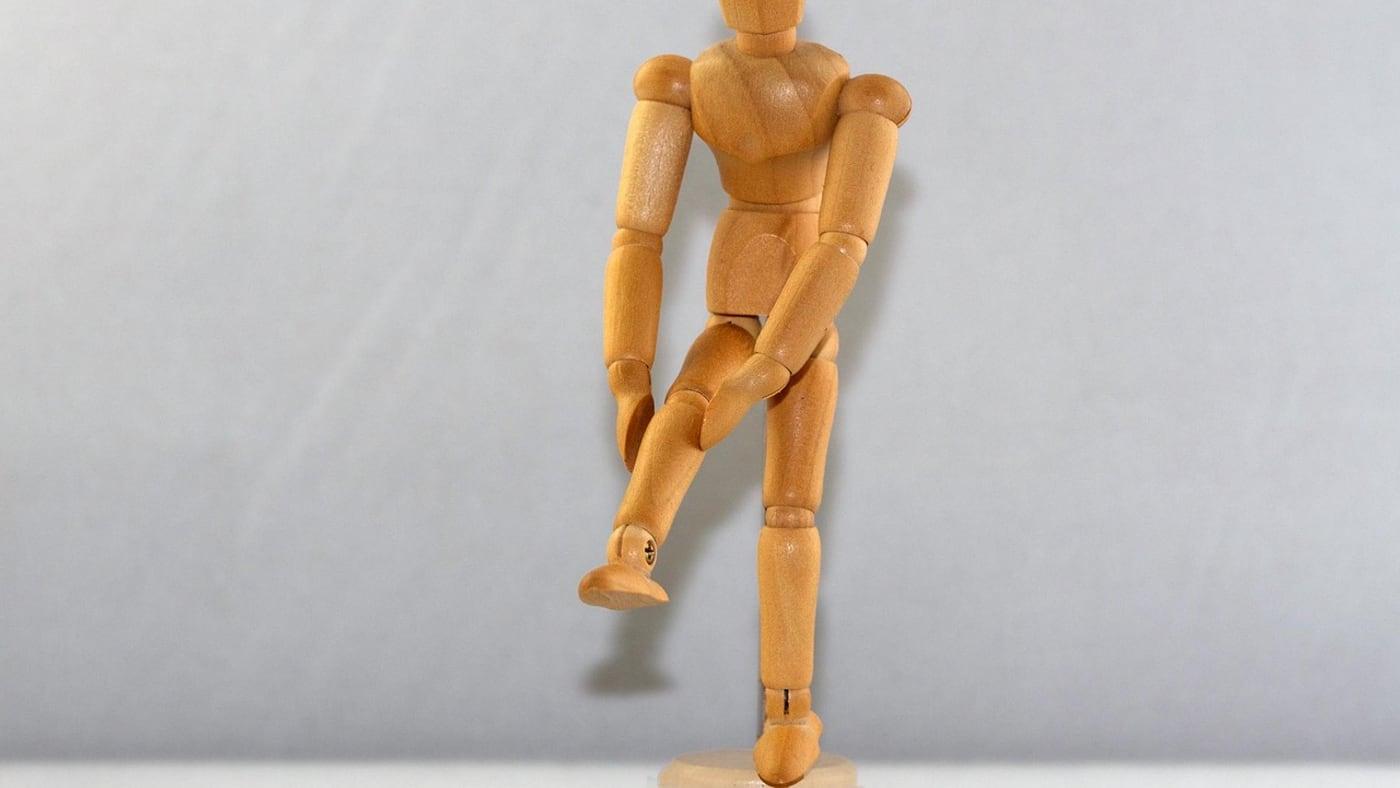
The pain often shows up during activity and eases with rest. The table below is a rough guide, not a diagnosis. Only a clinician can tell you for sure.
| Clue | Leans toward IT band | Think of something else |
|---|---|---|
| Location | Outer knee or hip | Front, inner, or deep knee |
| Timing | Builds while running | Hurts even at rest |
| After rest | Usually eases | Swelling or warmth stays |
Outer knee feeling twingy? Pause for today. Pushing through just means a longer break!
2. Why it happens: training load and hip strength
AAOS splits the causes into training errors and body factors. Sudden jumps in training, too little rest, and running on banked or uneven surfaces are the classic training errors. Weak hip, buttock and core muscles, or tight leg muscles, are the body factors.
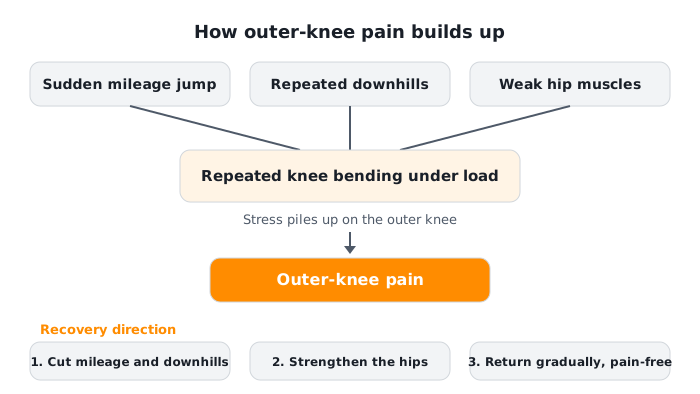
A 2013 review by Beals and Flanigan lists similar risk factors: IT band tightness, high weekly mileage, track and interval work, and weak hip abductors. It also notes that few studies directly link biomechanics to this injury.
- Did mileage, speed, or hills jump in the last few weeks?
- Do you often run the same direction on a track or on a sloped road?
- Does your pelvis drop a lot when you stand on one leg?
💡 Tip
Look back at the 2–3 weeks before the pain started. If even one thing jumped, you may have found your cause. For knee worries in general, see Does Running Really Ruin Your Knees? What the Research Says.
3. Recovery exercises: start with the hips
In 2024, Sanchez-Alvarado and colleagues reviewed 13 studies (201 runners) on non-surgical treatment of IT band syndrome. Hip abductor strengthening sat at the center of many treatments, but pain reduction ranged widely from 27% to 100%. The studies were small and varied, so the authors couldn't say which approach is best.
An older example: in a 6-week gluteus medius program described in the Beals review (Fredericson et al.), 22 of 24 athletes returned to running and hip abductor strength rose. Exercises like the ones below are commonly used, but when you're in pain, it's safest to set the dose with a professional.
| Exercise | How | Example dose |
|---|---|---|
| Side-lying leg raise | Hips stacked, lift top leg slowly | 10–15 reps, 2 sets |
| Clamshell | Knees bent, open top knee | 10–15 reps, 2 sets |
| Side plank | Elbow and feet, body in a line | 15–30 sec, 2 times |
Those doses are just examples. If pain increases, cut back right away, and stop at muscle fatigue, not pain. Think of a foam roller as a helper for symptoms; see Foam Roller Guide for Runners: A 5-Minute Routine.

The research is still small, so there's no single answer. But waking up your hips may make your knees much happier!
4. When can you run again? Pain-free steps first
AAOS says most people treated without surgery return to running in about 6 weeks, depending on severity and duration. Going back too soon can leave symptoms lingering or cause a new injury. The steps below are a cautious, general sequence, and you move on only if each step is pain-free.
| Step | What to do | Move on when |
|---|---|---|
| 1 | Everyday walking | No pain |
| 2 | Brisk walk, 30 min | No pain |
| 3 | 1 min jog, 2 min walk | 20 min, no pain |
| 4 | Easy jog on flat ground | No pain next day |
| 5 | Add distance or hills | One change per week |
⚠️ Caution
If your knee swells or feels warm, you can't put weight on it, or pain continues through the night at rest, stop running and see an orthopedic or sports medicine doctor. The same goes if symptoms don't improve over several weeks or keep coming back. Don't choose medication or injections on your own.
This week, set a count goal instead of a distance goal. In the Wittiz app you could set "3 runs this week, 20 minutes if pain-free," so rest days become part of the plan. Looking at the report for the week your pain started often reveals when mileage jumped, and Moongti loves a runner who comes back slowly. If your shoes are worn out, check Beginner Running Shoes Guide.

Coming back slowly is totally fine. One pain-free step is worth a lot!
Frequently Asked Questions (FAQ)
Should I stop running completely when the outside of my knee hurts?
If pain builds as you run, that intensity is a reason to rest. AAOS includes cutting back activity in conservative care, but how long varies. Once walking is pain-free, restart with walking.
Can stretching alone cure IT band syndrome?
It's hard to say stretching alone does it. In the 2024 review, hip abductor strengthening appeared most often. Treat stretching as a helper and reduce your training load too.
How long does IT band syndrome take to heal?
AAOS says most people treated without surgery return to running in about 6 weeks, though it depends on severity and duration. If you're not improving after a few weeks, see a clinician.
Wrapping up
Outer knee pain usually calls for less training load, stronger hips, and a gradual, pain-free return. This week, try one set of side-lying leg raises a day. Moongti will walk right beside you on the way back!
Try it for yourself in the Wittiz app!

References
- Sanchez-Alvarado A et al. (2024). Effects of conservative treatment strategies for iliotibial band syndrome on pain and function in runners: a systematic review. Frontiers in Sports and Active Living
- Beals C, Flanigan D (2013). A Review of Treatments for Iliotibial Band Syndrome in the Athletic Population. Journal of Sports Medicine
- OrthoInfo (AAOS). Iliotibial Band (IT Band) Syndrome
This article was written by the Wittiz team and includes app-related content. If you have knee pain or a joint condition, or feel unwell while running, please be sure to consult a medical professional.