
Protein Intake for Runners: How Much Per Day, and From What?
💡 Key Summary
✅ Studies point to about 1.4–1.8 g of protein per kg of body weight a day for runners
✅ Spread it over 3–4 meals at roughly 20–30 g each instead of one big dose
✅ Everyday foods like eggs, tofu and chicken come before any supplement
"Get protein after your run" is advice everyone has heard, but few people know the daily number. Do you need a shake, or is regular food enough? This post is for beginner runners and anyone dieting while running who wonders how much protein is enough, and it covers the daily range and easy ways to hit it.
1. Protein intake for runners: start at 1.4–1.8 g per kg
The International Society of Sports Nutrition (ISSN) puts daily protein for exercising people at 1.4–2.0 g per kg of body weight. A 2025 review on endurance athletes suggests about 1.8 g on training days and notes that athletes typically eat around 1.5 g.
So a handy starting range is 1.4–1.8 g per kg. Here's the rough math by body weight.
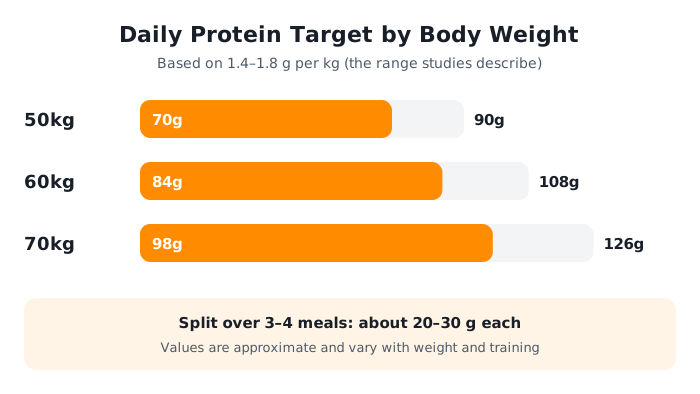
| Weight | Daily target (approx.) | Per meal (4 meals) |
|---|---|---|
| 50 kg (110 lb) | 70–90 g | about 18–23 g |
| 60 kg (132 lb) | 84–108 g | about 21–27 g |
| 70 kg (154 lb) | 98–126 g | about 25–32 g |
These numbers are calculated from the research range, so treat them as a baseline to check your meals against, not an exact answer. Some researchers think heavy training weeks and rest days may call for a bit more, but they say the evidence is still building.


Just multiply your weight by 1.4 and 1.8. Your daily target is somewhere in between!
2. How much per meal? Split it up instead of cramming
The ISSN position stand suggests about 0.25 g per kg, or 20–40 g, of high-quality protein per dose, spread through the day every 3–4 hours. At 60 kg that's around 15 g by the per-kg rule, so the 20–40 g range is a useful guide too.

Rather than loading up at dinner, add a little to breakfast, lunch, dinner and a post-run snack. For what to eat right after a run, see Running Meal Timing: Eat Before or After?.
| Meal | Protein (approx.) | Easy example |
|---|---|---|
| Breakfast | about 20 g | 2 boiled eggs + yogurt |
| Lunch | about 25 g | rice or toast + chicken or fish |
| After a run | 15–25 g | soy milk + a rice ball |
| Dinner | 25–30 g | tofu + meat or fish |
💡 Tip
If your regular meals already cover the day, you don't need to stress about eating protein the instant you stop. The position stand says the best timing likely varies by person. Shopping at a convenience store? See Convenience Store Running Diet.
3. Hitting your daily protein with everyday food
The ISSN stand says supplements are safe and convenient, but you should first try to get high-quality protein from whole foods. Eggs, tofu, fish, chicken and dairy make it easier than it sounds.

Here's a sample day for a 60 kg runner (target roughly 84–108 g). Protein values are rough per-serving figures that vary by product, so check the label.
| Meal | Example | Protein (approx.) |
|---|---|---|
| Breakfast | 2 boiled eggs + Greek yogurt | about 22 g |
| Lunch | rice + 100 g chicken breast + veggies | about 28 g |
| After a run | soy milk + a rice ball | about 12 g |
| Dinner | half a block of tofu + grilled fish | about 30 g |
That adds up to roughly 92 g, inside the range for a 60 kg runner, with no protein powder. To keep it going, swap the side dish through the week rather than repeating one menu.
If your weight loss has stalled, see When Running Isn't Helping You Lose Weight and check your total food intake as well as protein.
4. Is more protein enough? Carbs still come first
When you focus on protein it's tempting to cut rice or bread, but for runners carbohydrate is still the main fuel. The 2025 review reports that adding protein to carbs during exercise didn't improve performance when energy was matched, and carbs stay the priority for refilling glycogen.
| Role | Carbohydrate | Protein |
|---|---|---|
| Running fuel | main supplier | supporting |
| Recovery | refills glycogen | builds muscle |
| Priority | cover first | spread through the day |
⚠️ Caution
If you have kidney disease or a doctor has told you to limit protein, don't follow these numbers before talking to them. The position stand found no evidence of harm from high protein in healthy people, but if you have a history of disordered eating, it's safer not to fixate on numbers. Stop and get help if you feel dizzy, have chest pain or break out in a cold sweat while running.
Food experiments stick better when you can see the results. In the Wittiz app, set a goal like "run 3 times this week," eat as usual one week, then add one protein side dish a day the next, and compare pace and distance in your report. The jelly you earn for hitting goals can be spent dressing up Moongti.

Add just one protein to today's plate. An egg is plenty!
Frequently Asked Questions (FAQ)
How much protein should a runner eat per day?
Studies often point to 1.4–1.8 g per kg of body weight. At 60 kg that's about 84–108 g a day, or roughly 20–30 g per meal across 3–4 meals.
Do I have to eat protein right after a run?
Not necessarily. Your daily total and how you spread it matter more, and timing counts most when your next session is soon or your regular meals fall short.
Do I need protein supplements?
No. If eggs, tofu, chicken and yogurt get you there, that comes first. Think of powder as a handy backup for busy days.
Wrap-up
Aim for 1.4–1.8 g of protein per kg, spread over 3–4 meals of everyday food, and you're in good shape. It's easier to ask whether each meal has one protein side than to chase a number.
This week, pick the meal with the least protein and add an egg or some tofu. Moongti will sit beside you and count the side dishes!
Try it for yourself in the Wittiz app!

References
- Jäger R et al. (2017). International Society of Sports Nutrition Position Stand: protein and exercise. Journal of the International Society of Sports Nutrition
- Witard OC et al. (2025). Protein Nutrition for Endurance Athletes: A Metabolic Focus on Promoting Recovery and Training Adaptation. Sports Medicine
This article was written by the Wittiz team and includes app-related content. If you have kidney disease, diabetes or another condition, have been told to limit your diet, or feel unwell while exercising, please be sure to consult a medical professional.