
Winter Running Warm-Up: A 10-Minute Routine for Cold Days
💡 Key Summary
✅ Cold days leave you stiffer, so five minutes of dynamic moves before heading out really helps
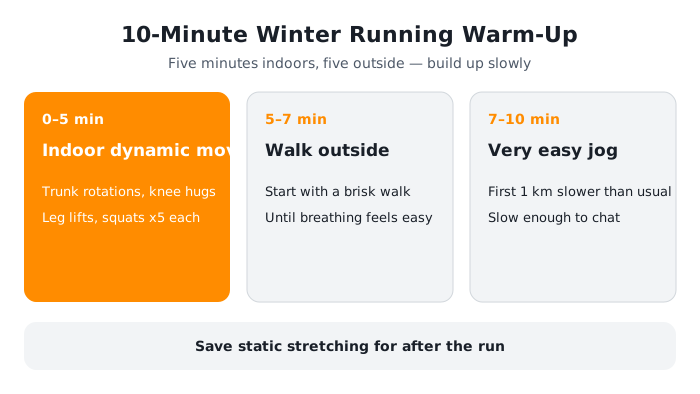
✅ Five minutes indoors plus five minutes of walking and easy jogging outside makes a 10-minute routine
✅ Save static stretching for after the run, not before
You open the door, the cold air hits, and your whole body tightens up. If you jump straight into a run, the first few minutes feel stiff and a little shaky. This guide is for runners who aren't sure how to warm up for winter running, from indoor moves to your first-kilometer pace.
1. Why Does a Winter Running Warm-Up Matter More?
The US health system Guthrie notes that muscles are tighter in the cold, which makes a pulled muscle more likely. It suggests getting your blood moving before you go out, with stair climbs or jumping jacks. That is practical advice from clinicians rather than a controlled trial.

Research compares which kind of warm-up works. In 2023, Li and colleagues pooled 35 warm-up studies. Dynamic stretching improved jump height and sprint times, while static stretching made sprints slightly slower. A 2021 review by Ullman and colleagues found that static stretching lowered short-sprint and jump results, with no clear change in running economy.
| Method | Before a run | When to use |
|---|---|---|
| Dynamic moves | Keeps or improves output | Before you go |
| Static stretching | Small power drop | After the run |
| Nothing | Stiff first miles | Avoid |
Both reviews mostly looked at sprints and jumps, and the studies were small and varied. So don't read this as "dynamic moves prevent injuries." A safer takeaway is move dynamically before, stretch after.

Most studies measure speed, not injuries, so there's no sure answer yet. Waking your body up still beats a cold start!
2. The Indoor Part of the 10-Minute Routine
Running retailer Fleet Feet shares eight dynamic moves to do indoors before a cold run. At five reps each, that takes about five minutes. We added five minutes of walking and easy jogging outside to make it 10.
| Move | How | Reps |
|---|---|---|
| Trunk rotations | Hips forward, twist the torso | 5 each side |
| Side leg lifts | Balance on one leg | 5 per leg |
| Back leg lifts | Don't arch your back | 5 per leg |
| Knee hugs | Hold 5 seconds | 5 per leg |
| Heel to glute | Hold 5 seconds | 5 per leg |
| Calf raises | Up, then lower slowly | 5 |
| Squats | Down to about 90° | 5 |
Start small and make each move bigger as you go. Don't work up a sweat, because damp clothes feel icy once you step outside. Stop when you feel warm.
💡 Tip
Do the five minutes in the living room before you put your shoes on, then walk right outside the door. Splitting it this way is easier to stick with.
3. Walk First Outside, and Keep Kilometer One Slow
Once the indoor moves are done, don't start running right away. Begin with a brisk walk outside, and move to a very easy jog when your breathing settles. Keep your first 1 km (0.6 mi) well below your usual pace, slow enough to chat.
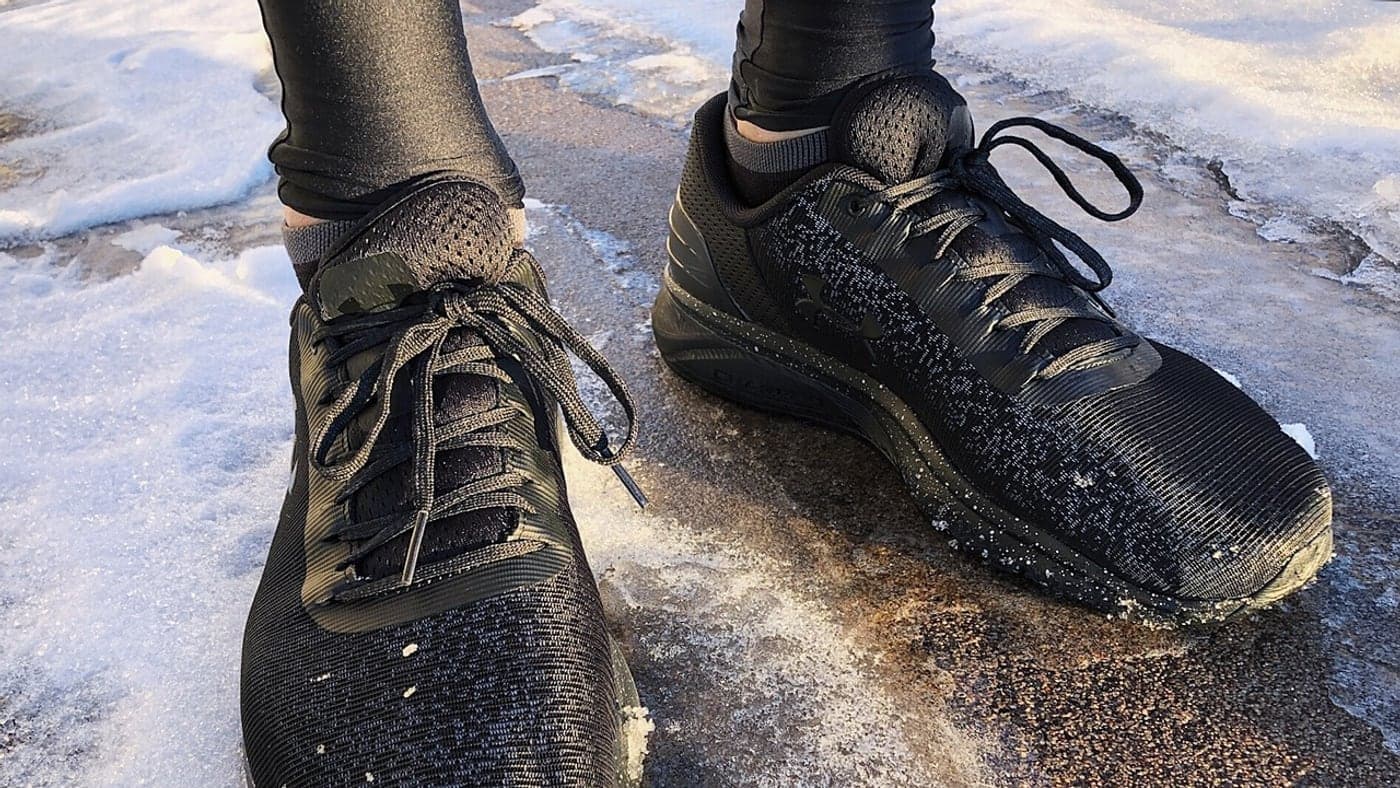
Guthrie also advises starting slowly and not chasing speed on cold days. On slick paths, shorten your stride and avoid shiny, smooth patches. If ice covers the ground, skipping the run is a fine call.
- Start with two minutes of brisk walking
- Move to a very easy jog when breathing feels calm
- Keep your first 1 km at a chatty pace
- Build to your normal pace once you feel warm
⚠️ Caution
Stop right away if you get chest pain, dizziness, a cold sweat or unusual breathlessness. If you have heart disease, asthma or high blood pressure, or struggle to breathe in cold air, talk to a doctor first. If you slip on ice and can't put weight on a leg, or it swells, get it checked.
4. Making the Warm-Up a Habit
In winter, order matters more than willpower. Bundle "shoes on → five minutes in the living room → walk outside" into one set and your body just goes. For what to wear, see Running Clothes by Temperature, and for winter intensity, see Winter Running Training.
| Weather | Warm-up | Run |
|---|---|---|
| Above freezing | 5 min indoors + walk | As usual |
| Below freezing | 5 min indoors + longer walk | Slow first 1 km |
| Ice or strong wind | 5 min indoors | Swap for indoor workout |
If joints worry you, the Running Injury Prevention Guide covers warning signs by body part. New to running? Start with the Complete Beginner's Running Guide.
Skipping the warm-up now and then is normal. In the Wittiz app, set a goal like "run 3 times this week" and add a rule that every run starts with five minutes of warm-up. Your run count shows whether the habit is holding, and dressing up Moongti with the jelly you earn is a fun bonus.

Just five minutes in the living room with me. It's cold out there, but you'll warm up fast!
Frequently Asked Questions (FAQ)
How long should a winter running warm-up take?
This guide uses five minutes indoors plus five minutes of walking and easy jogging outside, about 10 minutes total. A 2023 analysis found 7–10 minutes of dynamic stretching worked best, but it focused on jumps and sprints, so it doesn't transfer neatly to distance running. Stop when you feel warm and your breathing is easy.
Is it bad to do static stretching before a run?
In the research, static stretching tended to lower short-sprint and jump results. So do dynamic moves before you head out, and save long held stretches for after the run.
Should I warm up indoors or outside in winter?
Split it. Wake your body up indoors, then start outside with a walk to cut down on sweat. On very cold days, lengthen the outdoor walk.
Wrapping Up
A winter warm-up is five minutes of dynamic moves indoors, an outdoor walk and a slow first kilometer. Leave static stretching for after the run.
This week, try just five knee hugs per leg before you put your shoes on. Moongti will loosen up with you at the front door!
Try it for yourself in the Wittiz app!

References
- Li F et al. (2023). A systematic review and net meta-analysis of the effects of different warm-up methods on the acute effects of lower limb explosive strength. BMC Sports Science, Medicine and Rehabilitation
- Ullman ZJ, Fernandez MB, Klein M (2021). Effects of Isometric Exercises versus Static Stretching in Warm-up Regimens for Running Sport Athletes: A Systematic Review. International Journal of Exercise Science
- Fleet Feet. Warm-up Exercises for Cold Weather Running
- Guthrie. Cold Weather Running Tips
This article was written by the Wittiz team and includes app-related content. If you have heart disease, asthma, high blood pressure or another condition, or feel chest pain or dizziness while running, please be sure to consult a medical professional.